
Installation – Eng

INSTALLATION
About Installation
For O-SCP to function effectively as a secondary containment system, correct installation adapted to site-specific conditions is essential. Placement, ground preparation, elevation differences and fill materials all influence containment capacity, rainwater management and the ability to monitor system performance over time.
This page summarizes the key principles for installation, placement and configuration of O-SCP within its intended areas of use. For detailed work procedures, dimensions and inspection points, the complete assembly instructions should be followed.

1. Select Placement
Position O-SCP where refueling, equipment parking or handling activities will actually take place.

2. Prepare the Base
Excavate and prepare a level base with the correct slope toward the drainage side.

3. Position the System
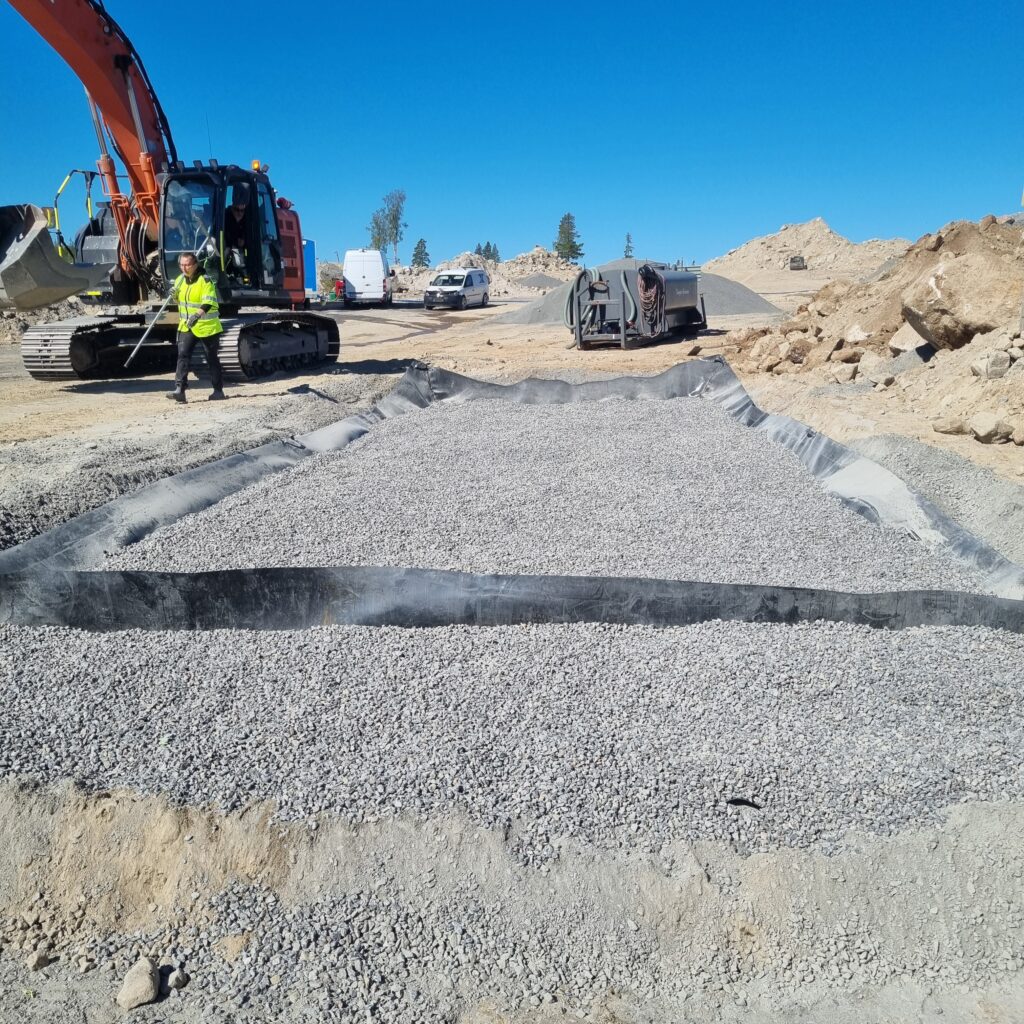
Place O-SCP into the prepared base and ensure that the partition wall stands perpendicular to the bottom surface.
4. Fill with Permeable Material
Backfill using load-bearing permeable material capable of supporting machinery loads while allowing liquid to move through the fill material.

Positional Principles for Correct Function
Three key conditions the installation must ensure:
Level Base
The base must be level to ensure the water level inside the system functions as intended and that containment occurs evenly across the surface.
Correct Elevation Toward the Drainage Side
The side containing the partition wall must be positioned lower than the remaining sides to allow controlled management of rainwater.
Perpendicular Partition Wall
The partition wall must stand perpendicular to the base to ensure correct passive water-level regulation and proper spill containment capacity.

Fill with Permeable and Load-Bearing Material
O-SCP is filled with permeable stone material capable of supporting the expected loads while allowing water, oil and other liquids to move downward through the fill. The material should not be compacted in a way that prevents liquids from reaching the bottom of the system.

Adapt Surface Area and Capacity to the Intended Use
The size and placement of the system should be adapted to the area being protected, the machinery or tanks positioned on the system and the maximum volume of contaminants that may need to be contained.
Placement on Site
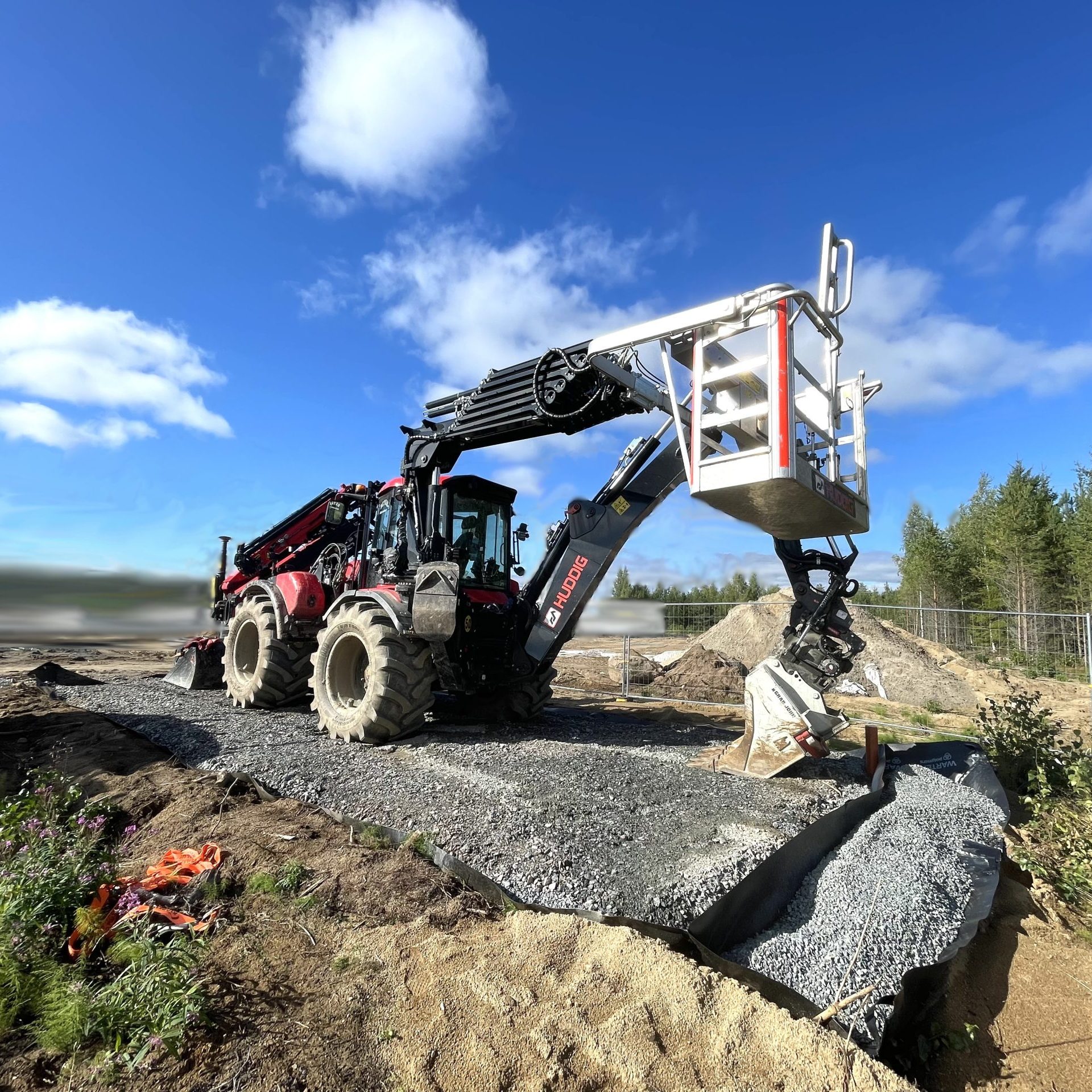
O-SCP should be positioned where spill risks actually occur: beneath refueling areas, machinery parking zones, portable tanks or other equipment containing oil, diesel or contaminants. Placement should allow machinery and vehicles to easily enter and exit the area from one of the three elevated sides, while the drainage side should remain level with or slightly above the surrounding terrain, such as a ditch, allowing water to leave the system even if surrounding ground becomes saturated during heavy rainfall.

Handling on Site
Each unit weighs approximately 25 kg and can be folded, moved and handled using reinforced carrying handles. The system can be pulled into position manually or with machinery and is designed for installation using limited equipment on site. A complete O-SCP unit can be installed by one to two people with an excavator in approximately 60–90 minutes.
Check Before the Area Is Put into Use
Checklist
• The fill material is permeable
• Entry and exit can take place from the correct side(s)
• The base is level
• The partition wall is straight
• The drainage side is lower

First Rainfall After Installation
After the first significant rainfall following installation, the water level inside O-SCP should be visually checked to ensure that the system has been installed correctly and that the water stabilizes at the intended level (see image). If the installation has been performed incorrectly, there is a risk that the water level may rise above the drainage side, which can affect the containment capacity of the system.
If the first rainfall is limited, the water level may be too low to visually verify system function and level differences. If required, the system can therefore be equipped with an inspection pipe or another simple level-monitoring solution to simplify inspection and follow-up.


Verification of Water Level
If necessary, O-SCP can be equipped with an inspection pipe or another simple level-monitoring solution to allow visual verification of the system’s water level after installation. This may, for example, be requested in sensitive environments or by supervisory authorities as part of inspection and monitoring procedures.
When the Installation Is Complete
Once O-SCP has been installed, refueling, equipment parking, washing and other operations should take place on top of the protected surface. On the next page, we explain how the system is used in practice and which routines should be followed during daily operation.