Product Overview

PRODUCT OVERVIEW
A New Standard for Safe Spill Management
O-SCP (Oil-Spill Containment Platform) is a ground-based secondary containment system developed to meet functional requirements for safe refueling, handling and storage of fuel, oil and other so-called light liquids (which float on water), as well as other contaminants associated with spill risks. The solution is a passive protective measure primarily intended to prevent spills and leaks from reaching surrounding soil, surface water or groundwater within the product’s intended areas of use.
Unlike conventional containment berms and similar systems, O-SCP is specifically developed to maintain its containment capacity for light liquids regardless of weather conditions during the construction season. This enables safe operation even in environments where rainfall would otherwise rapidly reduce functionality, without requiring a roof structure that often involves building permits.
Heavier contaminants and liquids that do not float on water, such as certain chemicals, particles or contaminated sludge, instead pass downward through the permeable fill material and collected water before being retained at the bottom of the system. Since these substances do not follow the draining surface water, they can remain contained within the sealed structure until contaminated material is removed and managed according to site-specific routines and risk conditions.
The solution is particularly relevant in situations where permanent systems, such as oil separators compliant with SS-EN 858 Class 1 connected to municipal wastewater infrastructure, are not practical or economically reasonable to establish.

Description of O-SCP
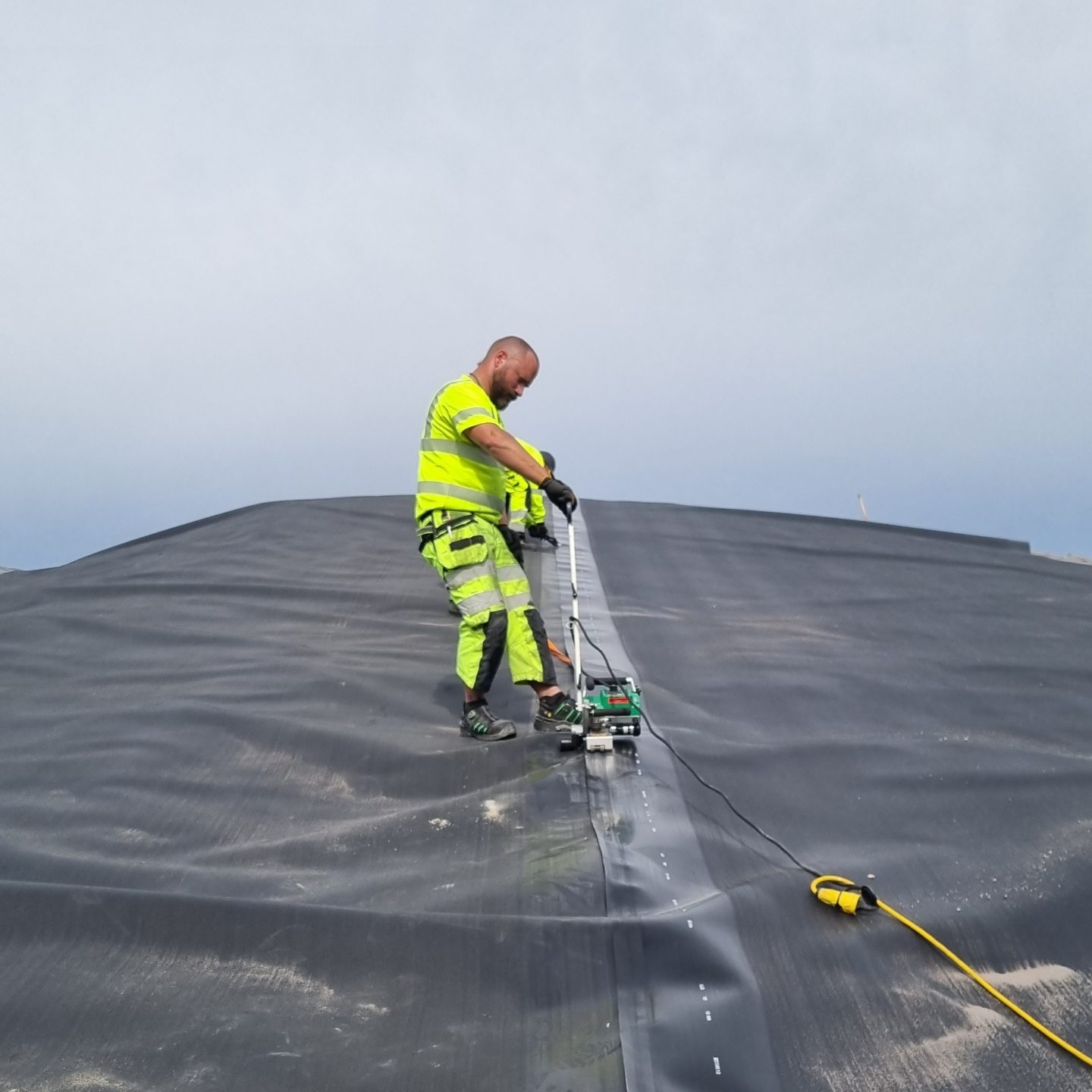
O-SCP is designed as a ground-based sealed containment basin manufactured from 1.5 mm thick HDPE plastic resistant to oil, chemicals, UV exposure, cold temperatures and mechanical wear. One of the short sides is lowered, and adjacent to this section is an internal partition wall with openings near the bottom, dividing the system into a larger primary section and a smaller drainage section.
Rainwater collected in the primary section passes through the openings in the partition wall into the lower drainage section, where it is continuously discharged away from the system. This process occurs without connection to sewer infrastructure and ensures that the liquid level in the primary section remains low even during prolonged or heavy rainfall.
Oil, diesel and other liquids lighter than water remain on the surface within the primary section and cannot pass through the openings or be transported further by the water flow. At the same time, incoming excess water continues to drain from the system.
Through this passive level-regulation principle, the system maintains its containment capacity both during dry conditions and rainfall. The available containment volume is dimensioned according to the maximum permitted water level in the system, corresponding to the level at the lowered short side.
The Problem with Traditional Containment Areas
Traditional ground-based containment systems are designed to collect spills, but in outdoor environments their functionality often deteriorates quickly. Rainwater continuously accumulates inside the basin, significantly reducing or completely eliminating the available containment capacity.
When the containment area is already filled with water, there is little or no remaining capacity to handle a spill. In such situations, oil or fuel may overflow the containment edge and spread into the surrounding environment despite the presence of a formal protection system.
As a result, these systems often fail to maintain consistent functionality over time, particularly in environmentally sensitive areas such as water protection zones.
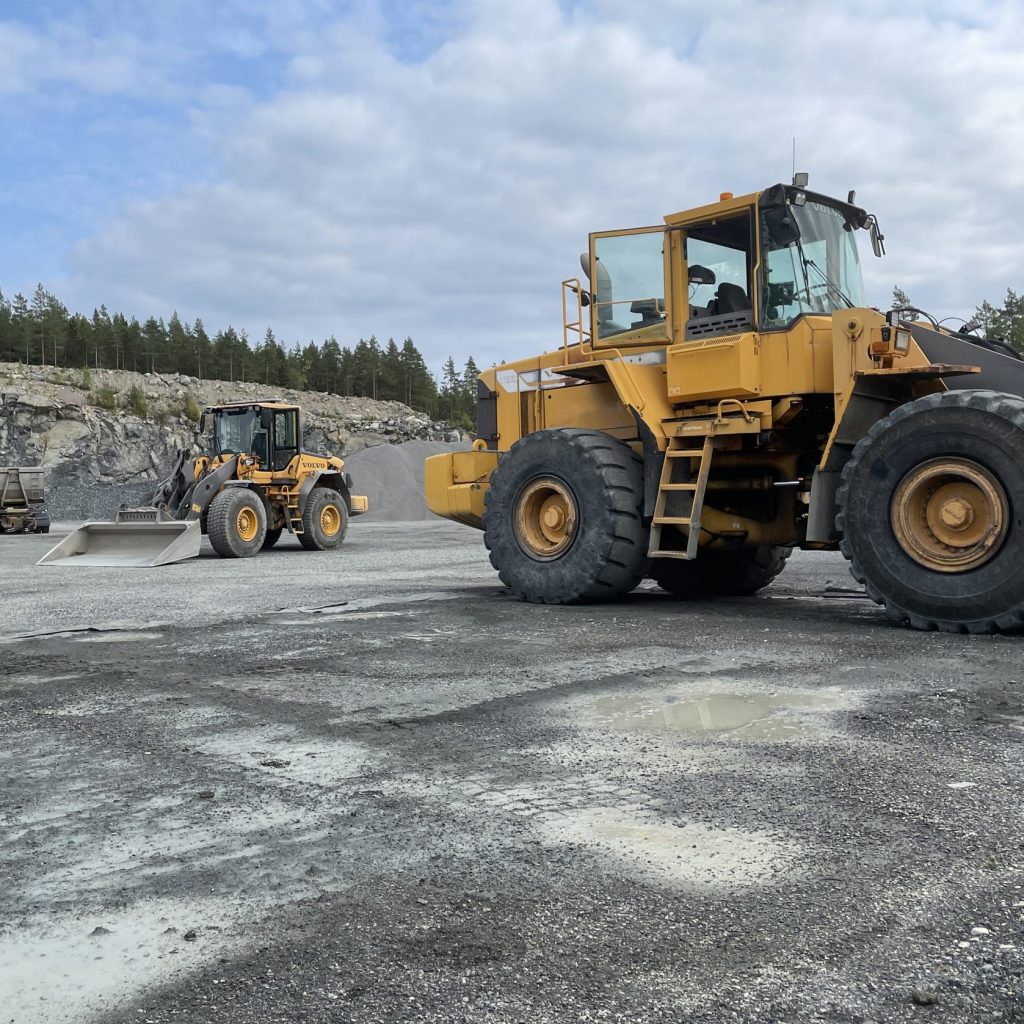

Without Partition Wall
Water continuously accumulates inside the basin and evaporates slowly, eventually filling the entire containment volume over time. Once the available space is occupied, there is no remaining capacity to contain a spill, increasing the risk of contaminants spreading into the surrounding environment despite the presence of a protection system.

With Partition Wall
Through the internal partition wall, water can pass into the lowered drainage section and be discharged away from the system, keeping the liquid level controlled. This preserves the available containment volume while oil and other liquids lighter than water remain in the primary section and can be managed without spreading further.
Automatic Drainage and Oil Separation
How O-SCP Is Used
O-SCP can be used across a wide range of work environments where refueling, equipment storage, parking and other activities are carried out directly on top of the system in order to reduce the risk of spills, leaks and contaminated water spreading into surrounding soil and water.
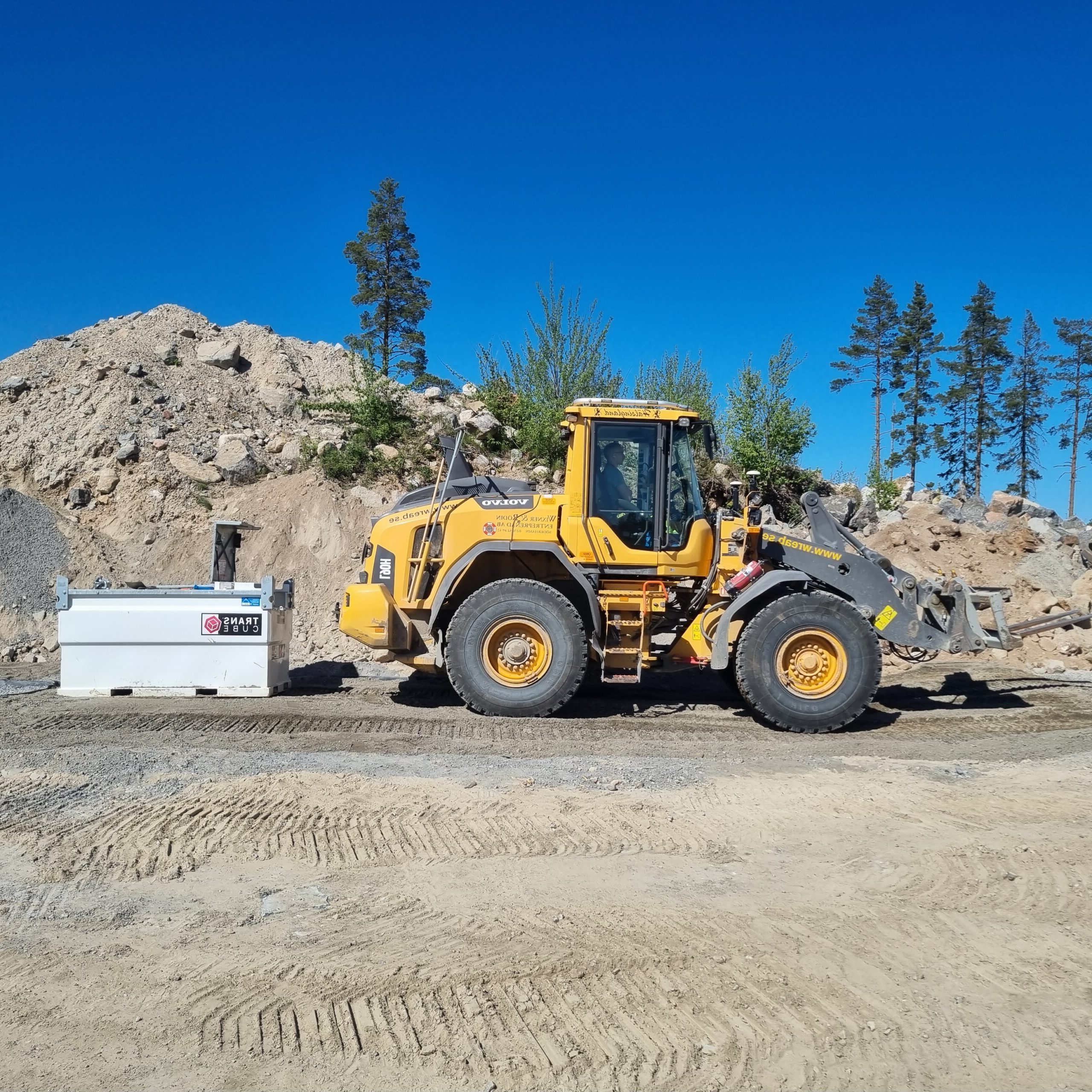
Refueling in the Field
Creates a clearly defined and protected refueling area where spills and leaks can be contained before reaching surrounding soil or water.

Parking of Oil-Containing Equipment
Can be used beneath parked machinery, containers and other equipment with a risk of contamination from leaks or hydraulic oil spills.
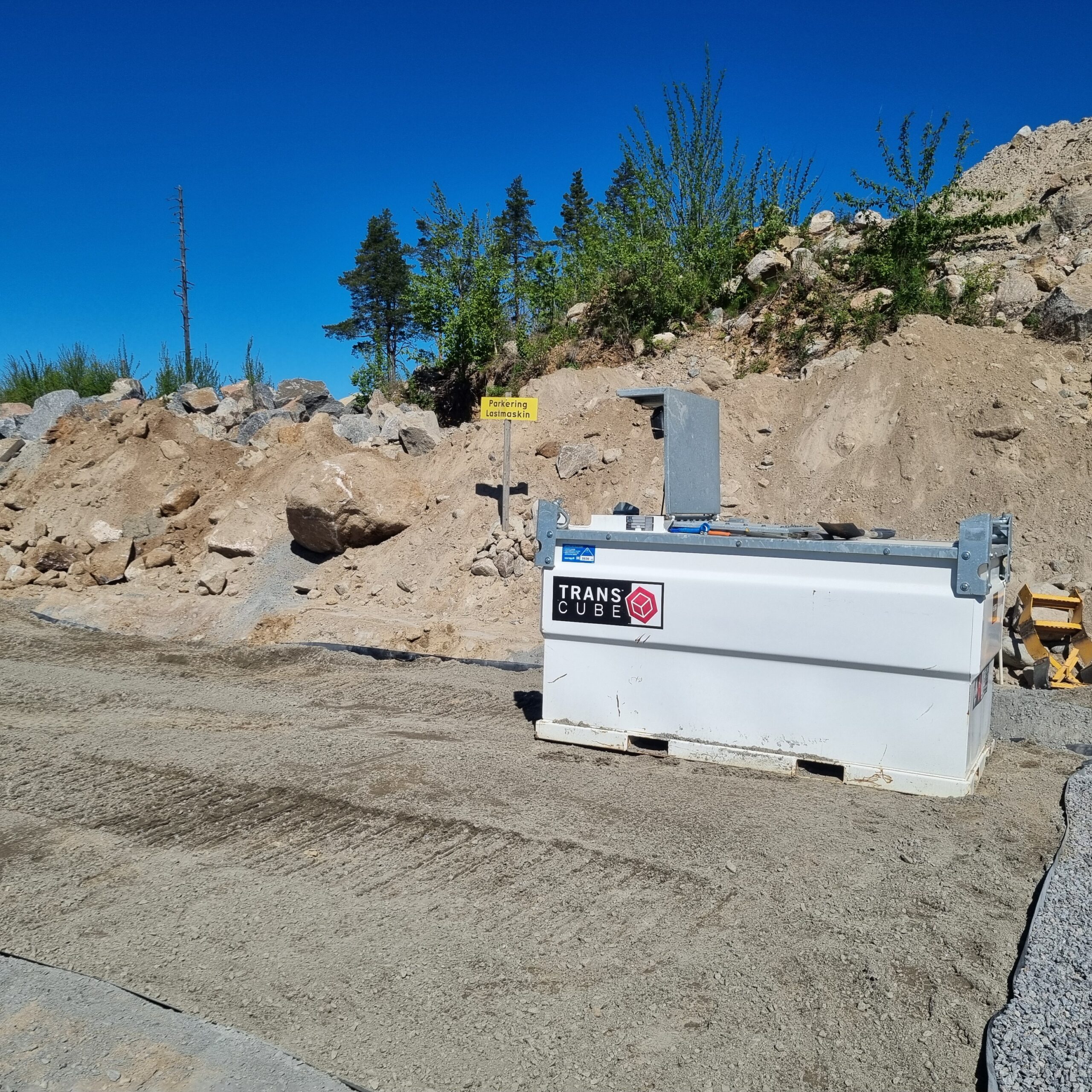
Secondary Containment Beneath Tanks and Cisterns
Provides ground-based secondary containment beneath portable tanks and fuel storage systems where significantly more permanent containment structures are impractical or unreasonable.

Temporary Worksites
Specifically developed for temporary and semi-permanent worksites where weather conditions, mobility and varying ground conditions require high flexibility.

Work in Sensitive Environments
Can be used as an additional protective measure in environments where risks to soil and water require enhanced spill prevention and containment.

Washing and Cleaning of Machinery
Can be used during machinery washing operations in the field to reduce the spread of dirt, spills and contaminated wash water into surrounding ground areas.